 From the Dock
Counting Backward by Sevens, and the Other Tasks Behind One Peach Gel Pack
Focus & Recall is a 25-milliliter gel pack from HealthyCell with 40 milligrams of caffeine and twelve other lines. I looked up the task each line was measured with, and sat down at a cabin table to do them.

This is a paid advertisement. Sponsored by Life Science Institute LLC (HealthyCell).

Carl Ostrander is the name this desk signs with, and the lake in these notes is the one outside the window where they were written.
Walt, who turns up below with a coffee mug and a lot of questions, is a composite of the men I fish with, not a source and not a reviewer.
Everything this page says about the product comes from the seller's own product page, its questions page, the panel printed on the box, and the published studies listed at the bottom.
I read all of it in September 2026.
Most mornings I'm on the dock before the loons are done talking.
There's a thermos, a folding chair and a legal pad, and not much else.
You know the kind of quiet I mean.
The lake is flat, the far shore is still grey, and your own head is the loudest thing for a mile.
That's when I notice the small stuff.
The name of the man who sold me the outboard, which I knew perfectly well on Tuesday.
The paragraph I read twice last night because my eyes moved and nothing else did.
The walk up to the shed, and then standing in the shed, wondering which of the four things in there I came for.
None of that is a crisis.
It's just a man in his sixties living in his own head, and if you're reading this, I'd bet you know every one of those moments.
Nobody on this dock is worried. We're just curious, and a little stubborn.
This summer Walt came down the path with a white box under his arm.
It was a box of thirty gel packs called Focus & Recall, from a company in South Carolina called HealthyCell.
He'd read the front, and he wanted to know what it actually meant.
"It says focus and recall," he said.
"Focus on what, recall of what, and who measured it?"
That last question turned out to be the good one.
Because every line on the back of that box has been measured somewhere, by somebody, with a particular task.
Some of those tasks are strange.
One of them is counting backward from a hundred by sevens, out loud, for the better part of an hour.
So I did what I'd do with a lure I didn't understand.
I looked up how each line was tested, and then Walt and I sat at the cabin table and did the tasks ourselves, with a pencil and no box open.
What you'll find below is each line of that gel pack sitting next to the task it was measured on, in plain words, with the dose in the study and the dose in the pouch.
Some lines match their study pretty closely.
Some are a long way off, and a few were never measured on any task at all.
I'll tell you which is which.
And I'll tell you what costs nothing and belongs ahead of any box, because that's a fair thing to know too.
The Small Slips a Man Notices on a Quiet Morning
Let's start where you already are.
Have you ever walked into a room and stood there, waiting for the reason to catch up with you?
Of course you have.
So has every man I know, and so has every woman I know, and so did my father.

Here's the thing about those moments.
They feel like memory, but a lot of them are really about attention.
If your eyes read a line while your mind was on the boat trailer, that line never got written down in the first place.
There's nothing to recall, because nothing was filed.
So is it memory or is it focus?
Most days, it's a little of both, and the two lean on each other like a pair of oars.
That matters for this page.
The box Walt brought says "focus" and "recall" on the front, and those are two different things with two different kinds of tests behind them.

Here are the everyday versions I hear about most, on the dock and at the bait shop.
You'll recognize a few of them.
- A name that shows up an hour after you needed it.
- Rereading the same paragraph because your eyes kept going and your mind didn't.
- Walking into the shed, or the kitchen, and waiting for the reason to arrive.
- Losing the thread of a story halfway through telling it.
- Going blank on a number you dial every week.
- Setting your glasses down somewhere sensible and then finding them somewhere silly.
None of that needs a box of anything.
It needs a little patience, a decent night, and maybe a better system for the glasses.
But I understand why a man picks up a box like Walt's.
You'd like the afternoon to feel a bit more like the morning, and you'd like the name to show up on time.
That's a reasonable thing to want.
The honest question is what the lines on the box were actually shown to do, and on which task.
Why the Second Thermos and the Sticky Notes Only Go So Far
Before any box, most of us already have two tools.
Coffee, and little yellow notes stuck to things.
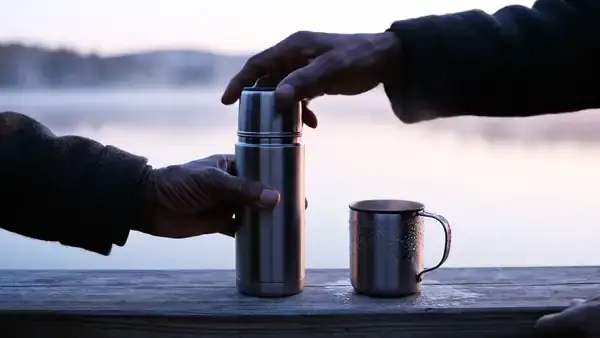
Coffee works, and I won't pretend it doesn't.
The European Food Safety Authority says caffeine in moderate doses makes people more alert and less sleepy. [1]
But you know what the second thermos feels like.
The first cup wakes you up, and the third one mostly makes you jumpy and has you up at two in the morning.
The Food and Drug Administration lists what too much caffeine can bring: a faster heartbeat, jitters, an upset stomach, a headache and a bad night. [2]
So there's a ceiling on how far the pot can carry you, and most of us find it by accident.

And what about the hour after lunch?
That's the one I hear about most, and it's where coffee gets tricky for men our age.
You finish a sandwich on the porch, and by one thirty the crossword looks like it's written in another language.
A cup at that hour helps with the crossword and then argues with you at midnight.
So a lot of us just push through it.
We take a walk around the point, splash some water on our faces, or give in and close our eyes for twenty minutes in the chair.
None of that is wrong, either.
A short walk after lunch is about the oldest tool there is, and it asks nothing of your evening.
But it's worth noticing that the afternoon is the part of the day most boxes like Walt's are really aimed at.
Several buyers of this one wrote about exactly that hour, and I'll get to their words later.
The sticky notes are the other tool.
They work too, right up until you have eleven of them on the refrigerator and none of them is the one you need.
So why don't the usual tools go further?
Because coffee wakes you up without telling your attention where to go, and a note only helps if you remember to look at it.
Neither one is bad.
They're just blunt, and a man who's noticed his afternoons slipping starts wondering whether something a bit less blunt exists.
That's the gap boxes like Walt's are written for.
The front of his box talks about focus, recall and staying alert, and the seller's page says a pouch should be felt within half an hour and last two or three hours.
Whether any of that holds depends on what each ingredient was actually tested on.
And to understand that, you need to know how researchers put a number on something as slippery as focus.
How Researchers Put a Number on Focus
Here's something I didn't know until this summer.
When a study says an ingredient "improved attention," it almost never means the people felt sharper.
It means they did a specific task, usually on a computer, and got a slightly better score or a slightly faster time than the group that took a dummy capsule.
Every word in that sentence matters.
What kind of tasks are we talking about?
Mostly small, dull ones, repeated a lot, so that tiny differences show up.

Here are the ones that come up in the studies behind this box.
I've given each one a plain name, and a way to get a feel for it at your own table.
- The sevens: count backward from a hundred by sevens, out loud, as fast and as accurately as you can.
- The switch: sort a deck of cards by color, then by suit, then by color again, changing the rule with no notice.
- The distraction: remember a short list while somebody reads out other words you're supposed to ignore.
- The word list: hear fifteen words, do something else for twenty minutes, then say back as many as you can.
- The fluency round: name as many animals, or words starting with one letter, as you can in a minute.
- The reaction round: press a button the moment a light comes on, over and over, without getting sloppy.
Walt and I did all six at the cabin table on a rainy Thursday.
We didn't take anything first, and we weren't testing anything but our own patience.
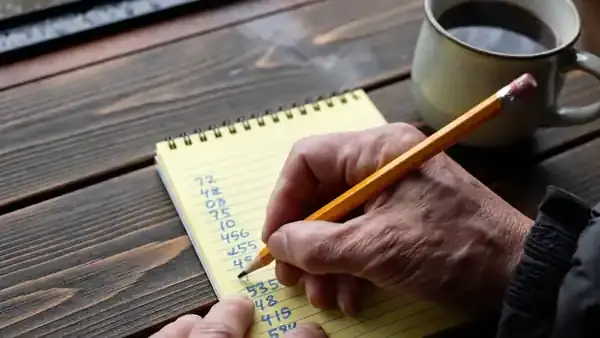
What did we learn?
That the sevens get tiring fast, that the switch makes you laugh at yourself, and that the word list is humbling for everybody.
We also learned something more useful.
Your score on any of these swings a lot from one try to the next, depending on the coffee, the night before, and whether the dog is barking.
A single score tells you almost nothing. That's why the studies use groups and dummy capsules.
I want to be plain about one thing.
Doing these at your table measures nothing about you, and it isn't a check of anything.
Clinicians use real, structured checks, given in person, and read against your age and history.
What we did at the cabin was just a way to feel what the researchers were asking people to do.
Once you've done the sevens yourself, a sentence like "improved serial subtraction" stops sounding like jargon and starts sounding like a man with a pencil.
That's the whole point of this section.
There's one more idea worth carrying into the rest of the page.
A study measures a task, in certain people, at a certain dose, for a certain length of time.
If any one of those four things differs from the pouch in your hand, the study tells you less about the pouch.
That sounds obvious written down.
But it's the thing most labels hope you won't check, so I checked it for every line.
Two Words on the Front of a Box
Walt's box says "focus" and "recall" in big letters.
So what are those two words doing on a box, legally speaking?
In this country, a supplement can describe how an ingredient supports a normal function of the body.
It can't claim to act on any health condition, and it has to carry a standard sentence saying the Food and Drug Administration hasn't evaluated the claim.
That's why those words usually come with a small symbol after them.
The symbol points to that sentence, down at the bottom of the panel or the page.
Does that make the words untrue?
No, it makes them a description written by the seller, not a finding written by a researcher.
The difference matters on a dock at six in the morning.
A description tells you what the seller hopes you'll notice, and a finding tells you what a group of people actually did on a task.
Here's how I'd translate the two words into the tasks from the last section.
It's rough, but it's the way the studies below divide things up.
- Focus usually means the switch, the distraction task, the reaction round, and the sevens over a long hour.
- Recall usually means the word list, said back after a delay, and sometimes the fluency round.
So when a box says both, it's promising something on two different kinds of tasks.
A line can do fine on one and nothing on the other, and most of them are only tested on one.
There's one more word on Walt's box worth a note: "alert."
Alertness is the one thing everybody agrees caffeine brings, and it's measured by asking people how awake they feel. [1]
Focus, recall and alert are three different tasks, and a box can say all three in one breath.
Keep those three apart as we go.
It makes the right-hand column much easier to read.
The Cheapest Tasks Come First, and They Cost Nothing
Before you spend a dollar on any box, here are the things with longer right-hand columns than most lines on Walt's.
None of them come in a box.

Water.
In the Berlin Aging Study, a third of 1,111 adults aged 60 to 89 turned out to be short of water by a lab measure, and they slipped more over time on a processing-speed task. [3]
A review of 18 studies in adults 60 and older found some, though sparse, evidence linking too little water to poorer scores on thinking tasks. [4]
That's observational, and it's still more than several lines on the box can say.
A glass at breakfast and a bottle in the boat cost almost nothing.
I started doing both after a hot August morning left me muddled on my own dock.
The plate.
In a three-year trial of 604 older adults, the group that ate the MIND way, with greens, berries, beans, nuts, olive oil and fish, and a group that simply ate a little less both improved their thinking scores by about the same amount. [5]
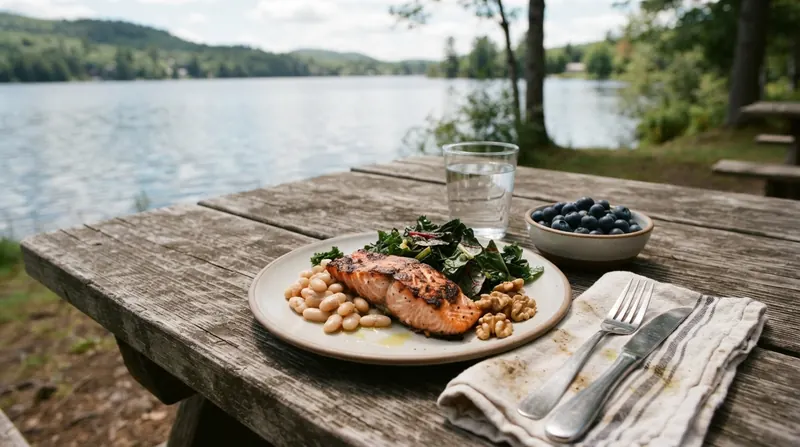
That's an honest result, and I like it.
It says the change of habit mattered more than the particular list.
A large Brazilian study followed 10,775 adults for about eight years. [6]
Those who ate more from the ultra-processed shelf, the packaged snacks, sweet cereals and processed meats, slipped faster on thinking and planning tasks.
The evening glass.
In British civil servants followed for thirty years, heavier drinking went with shrinkage of the part of the brain most involved in forming memories, and with faster slipping on the fluency round. [7]
Less in the glass after supper is the cheapest line on this whole page, and one of the best studied.
It's also the hardest, and I won't pretend it isn't.
Sleep, walking and company.
I can't give you a study for these on this page, and I won't borrow one.
But every plain-language booklet on getting older puts them on the short list.
A full night, a walk around the point and an evening of cards with people who talk back.
Water, the plate, the evening glass, a walk and good company. None of them comes in a box, and most of them have more behind them than most lines on Walt's panel.
Why a Legal Pad Beats a Label on the First Read
I'll tell you how I read a box now, because it took me a few summers to get here.
I write two columns on the legal pad before I believe a word of the front.
The left column is the line and its dose on the panel.
The right column is the task it was tested on, in whom, at what dose, and for how long.
Why bother with the right column?
Because the front of any box is written by the people selling it, and the right column is written by the people who measured it.
Most lines on most boxes never get a right column at all.
When they do, the dose in the study is often bigger, or the people are younger, or the study lasted one morning instead of one month.
There's nothing clever about this.
It's just slow, and it rewards the kind of patience a man learns sitting in a boat.
Two columns on a legal pad. One from the seller, one from the study.
Is that really so different from buying fishing line?
Not very, and that's the comparison that finally made it click for Walt.
The spool says ten-pound test in big print on the front.
Any man who's fished long enough knows that number was measured on a machine, with a fresh line, a clean knot and a steady pull.
Out on the water, the knot is tied with cold fingers, the line has sat in the sun for two summers, and the pull comes all at once.
The number on the spool is true, and it still tells you less than you'd like about your line on your lake.
A study is the machine in that story.
It measured something real, under its own conditions, and the question is always how close your conditions are to its.
Walt nodded at that for a long time.
Then he said the spool at least tells you how it was tested, and most boxes don't.
He's right, and that's the whole reason for the right-hand column.
You fill it in yourself, from the studies, because the front of the box won't.
It took us two evenings at the cabin table for this one box.
You won't need two evenings, because the column is already filled in below.
Walt's box has thirteen lines on its panel.
That's a lot of right-hand columns, and a few of them turned out to be blank.
Before we fill them in, let's look at the thing itself.
It's a stranger object than I expected, and the format matters for how you'd actually use it.
A Peach Gel Pack That Came to the Cabin in a White Box
Focus & Recall is made and sold by Life Science Institute LLC, which trades as HealthyCell, in Mount Pleasant, South Carolina.
The box holds thirty single-serving pouches, and one pouch is one serving.
What is it, exactly?
It's a thick, fruity gel in a foil pouch about the size of a playing card, sold as a dietary supplement.
The seller calls the texture MicroGel and describes it as tiny, easily absorbed particles.
The page prints a figure for how much better it absorbs, and cites no study for it, so I'm leaving that figure on the seller's page.
How do you take it?
You tear the corner and squeeze it into your mouth, or stir it into a glass of juice or water, or blend it into a smoothie.

No water is needed, which is the part that made sense to me on a boat.
You can't always make coffee in a boat, but you can keep a pouch in your jacket.
When does the seller say you'd notice it?
Its questions page says within thirty minutes, for a stretch of two or three hours, and that it's designed for long-term daily use.
Hold on to those numbers.
Two or three hours after one dose is exactly the kind of window most of the studies below looked at, and that turns out to be a fair match.
What's on the panel?
Here it is, in the order the box prints it, with the amount in one pouch.
- Vitamin B6, 4.3 milligrams; folate, 400 micrograms; vitamin B12, 4.8 micrograms.
- Taurine, 500 milligrams.
- L-tyrosine, 300 milligrams.
- Panax ginseng root extract at 1 percent ginsenosides, 200 milligrams.
- Phosphatidylserine from sunflower lecithin, 100 milligrams.
- L-theanine, 100 milligrams.
- Ahiflower seed oil, 100 milligrams.
- Curcuminoids from turmeric root, 100 milligrams.
- Caffeine from green coffee beans, 40 milligrams.
- Huperzine A from a club moss, 50 micrograms.
There are also 30 calories, 6 grams of carbohydrate, 2 grams of added sugar and 10 milligrams of sodium in each pouch.
The rest is water, vegetable glycerin, apple juice concentrate, flavorings, a stevia leaf extract and a few thickeners.
One small thing I noticed and want to pass on.
The label says the caffeine comes from green coffee beans, while the seller's questions page says green tea.
It's a small mismatch, and it doesn't change the 40 milligrams.
But it's the kind of thing I write in the margin of the legal pad.
Forty milligrams of caffeine is a good deal less than a mug of coffee, and that's the first number to count against your own morning.
Why is that the first number?
Because a 12-ounce cup of brewed coffee holds somewhere between 113 and 247 milligrams, according to the Food and Drug Administration. [2]
The seller's questions page compares the pouch to "a cup of coffee."
That sentence may date from the older recipe, since at least one buyer wrote in 2022 that the caffeine had gone from 100 milligrams down to 40.
Either way, the box in front of you says 40.
That's somewhere around a third of a small cup, or less, and it's the number to add to whatever you already drink before noon.
Now for the right-hand column.
We'll take the lines in the order of the tasks, starting with the pair that was tested together.
The Switch and the Distraction: Caffeine and Theanine, Tested as a Pair
What is theanine, for a start?
It's an amino acid found almost only in tea leaves, and it's the reason green tea tastes a little brothy.

Caffeine and theanine grow together in that same leaf.
So it makes sense that somebody tested them together, and somebody did.
In a small study of 27 healthy volunteers, people took 50 milligrams of caffeine with 100 milligrams of theanine, once, and a dummy drink on another day. [8]
An hour later they were faster and more accurate on the switch task, and at an hour and at an hour and a half they were less thrown by distracting words during a memory task.
How close is the pouch?
Forty milligrams of caffeine and 100 of theanine, against 50 and 100 in the study.
Forty and 100 in the pouch, 50 and 100 in the study. That is the closest match on the whole panel, from one dose in one small study, and it wasn't this pouch.
I like that match.
It lines up with the seller's own clock, too, since thirty minutes to three hours covers both of the times the study measured.
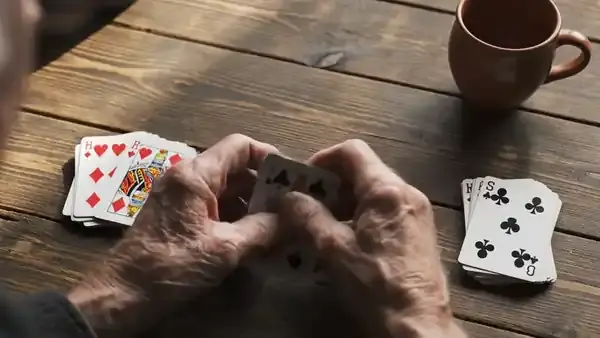
Is caffeine alone doing the work?
Partly, and the same study said so, since caffeine on its own also raised how alert people felt and helped on the switch task at an hour and a half.
That's an honest result, and I'd rather give it to you whole.
The pair did a little more than caffeine alone on some of the tasks, and caffeine alone did plenty.
Theanine has been studied on its own, too.
In Japanese men and women aged 50 to 69, a single dose went with a faster reaction time on an attention task and more right answers on a working-memory task. [9]
That's the reaction round from the cabin table, in people our age.
The published summary doesn't give the dose, so I can't set it beside the pouch's 100 milligrams.
There's also a four-week study that gave 200 milligrams a day to 30 healthy adults with an average age of 48. [10]
After the theanine weeks, they did better on the fluency round and on planning tasks.
Two things hold that result back.
Against the dummy capsule, the fluency gain showed up only in the half who started with lower scores, and two of the authors worked for the company that supplied the theanine.
The pouch carries half that trial's daily theanine. The one-dose pair study is the closer match.
What does this pair mean for an ordinary morning?
It means the first two lines on the pouch are the ones with the most honest right-hand column, for the hour or so after you take it.
It doesn't mean weeks of pouches add up to anything.
None of these studies ran long enough to say that, and the one that ran four weeks used twice the theanine.
And the caffeine still counts.
If you've had two big mugs before nine, the pouch's 40 milligrams goes on top of those, and the Food and Drug Administration's 400-milligram figure is for the whole day. [2]
The Sevens: Ginseng at a Quarter of the Strength
Now for the task in the headline.
Why would anybody count backward by sevens for an hour?
Because it's a clean way to wear the mind out on purpose.
Researchers use it to see whether something helps people keep going when the work is dull, hard and long.

In one study, 30 healthy young adults took 200 milligrams of a ginseng extract called G115, once, and a dummy capsule on another day. [11]
During an hour of sustained mental work, they did better on the sevens and rated themselves less mentally tired.
A second study gave the same extract at 200 or 400 milligrams a day for eight days, again in young adults. [12]
The 400-milligram dose went with better mental arithmetic, the 200-milligram dose actually slowed one arithmetic task, and repeated dosing added nothing over a single dose.
Two small studies, both in people around twenty-three, both with the four-percent extract.
Now the pouch.
It carries 200 milligrams of Panax ginseng root extract standardized to 1 percent ginsenosides.
The G115 extract in those studies is standardized to 4 percent.
Ginsenosides are the compounds the standardization is counting, so the pouch carries roughly a quarter of what the study capsules did.
Same weight on the panel, a quarter of the part that's being counted.
That's the right-hand column for the sevens.
And the people were young.
Nobody in either study was anywhere near the age of the men on my dock.
Ginseng is on the panel at the study's weight and about a quarter of its strength, and it was tested in young adults. The sevens task doesn't carry over cleanly.
When Walt and I did the sevens at the table, he got to 51 before he lost the thread.
I got to 44 and then wrote 38 by mistake, and we both decided the coffee had nothing to do with it.
The Word List: Phosphatidylserine at Exactly the Trial's Dose
This is the task that gets the most attention on the front of the box.
What does the word-list task really look like?
Someone reads you a list of words.
Later, after you've done something else for a while, they ask you to say back as many as you can, which researchers call delayed verbal recall.
Phosphatidylserine is a fat that sits in the walls of every cell.
The pouch's version comes from sunflower lecithin, at 100 milligrams.

Here's the study that lines up best.
Seventy-eight Japanese adults aged 50 to 69, who felt their memory had slipped, took 100 or 300 milligrams a day, or a dummy capsule, for six months. [13]
That's our age group, at exactly the pouch's dose, for half a year.
It's about as good a match as a label ever gets.
And the result?
Everyone's scores went up, including the group that took the dummy capsule, and by about the same amount.
Only in a smaller group who started with lower scores did the phosphatidylserine groups rise clearly from where they began, mostly on the word list.
That's a thin thread, and I'd rather tell you it's thin.
One line on the pouch was tested at exactly its dose, in people our age, for six months. The group that took nothing did just as well.
I actually find that result useful.
It tells you how much a score can rise just from practice and attention, which is exactly what happened to Walt and me on our second rainy Thursday.
We both did better on the word list the second week.
We hadn't taken anything, and that's the whole reason studies need a comparison group.
The Hard Hour: Tyrosine, and When It Seems to Matter
What about a task that's just plain demanding?
That's where tyrosine comes in, an amino acid your body already gets from meat, fish, eggs, dairy and beans.
A 2015 review of the research said tyrosine seems to help performance mainly in short, demanding situations. [14]
Its usefulness outside those moments looked limited.
Think of backing a trailer down a steep ramp with three people watching.
That's the sort of hour the studies mean, not an ordinary Tuesday.
The pouch carries 300 milligrams.
The review doesn't give one dose that works, so I can't match it line to line.
Tyrosine's right-hand column says "maybe, in a hard hour." That's an honest column, and it's a short one.
The Tasks That Came Back Flat: Taurine and the B Vitamins
Not every line has a hopeful column.
What happens when a study finds nothing?
Then you write "nothing" on the legal pad, and you move on.
That's what I did for two lines on this panel.
Taurine is the biggest line on the pouch, at 500 milligrams.
A 2025 analysis pooled seven studies with 402 people and found no effect of taurine on scores for thinking tasks. [15]
The seller pairs taurine with caffeine for staying alert.
That may be the reason it's there, but on a thinking task, the pooled studies came back flat.
The largest number on the panel has the flattest column.
The three B vitamins are next: B6, folate and B12.
They're ordinary vitamins, and the pouch carries 250 percent of the daily value of B6 and 200 percent of B12.
The biggest review I know of pooled 14 trials in 27,882 adults with healthy thinking. [16]
It concluded that B-vitamin supplements probably have little or no effect on overall thinking for up to five years.
So why include them?
For some men, B12 does matter, because the body absorbs less of it with age.
The National Institutes of Health's supplement office says between 3 and 43 percent of older adults living at home are short of B12, depending on how it's measured. [17]
It also sets no upper limit for B12, because it has so little potential to do harm.
For B6, the same office sets an upper limit of 100 milligrams a day for adults. [18]
The pouch's 4.3 milligrams is far below that, though it's worth adding up if you take a multivitamin too.
If nobody has checked your B12 in a few years, that's a cheaper question than any box.
Ask for it at your next checkup.
Two Lines With No Task at All: Turmeric and a Seed Oil
A few lines never got a right-hand column.
How does a line end up on a panel without a task behind it?
Usually because the ingredient is popular, or because the seller has a reason other than a thinking task.
The seller says its turmeric and ginseng have antioxidant effects on cells, which is a different claim from focus.
The pouch carries 100 milligrams of curcuminoids from turmeric root.
The National Institutes of Health's center for complementary health says we don't know enough to conclude whether turmeric or curcumin is beneficial for any health purpose. [19]
It says turmeric is likely well tolerated by most adults for two or three months.
It also says harm to the organ that processes what you swallow has been reported in some people who took highly absorbable forms.
The pouch describes its gel as highly absorbable.
That's a reason to show the box to your pharmacist, and a reason to stop if you ever notice unusual tiredness, dark urine or yellowing of the skin or eyes.

The other line is Ahiflower seed oil, a plant oil with omega-3s, at 100 milligrams.
In a 28-day study of 88 healthy adults, people took 9.7 milliliters of it a day, and it raised one omega-3 in their blood. [20]
That study measured blood, not any task.
And 9.7 milliliters a day is nearly a hundred times the pouch's 100 milligrams.
Turmeric and the seed oil have no thinking task behind them on this page. One has a caution, the other a blood marker at nearly a hundred times the dose.
The Club-Moss Line, and a Short Visit to the Pharmacist
The smallest number on the panel is the one I'd read most slowly.
It's 50 micrograms of huperzine A, a compound taken from a Chinese club moss.
Why does such a small line matter?
Because huperzine A slows the enzyme that breaks down acetylcholine, one of the messengers nerve cells use to talk to each other.
In one small study of healthy adults, with twelve people in each group, single doses of 100 and 200 micrograms slowed that enzyme in the blood. [21]
The 200-microgram dose held recall steady across sessions, and neither dose improved overall performance on the tasks.
The pouch carries half the lower dose.
So the right-hand column says "enzyme changed, no overall gain, at twice this amount."
Here's the part that sends me to the pharmacy counter.
Some everyday things people take act on that same enzyme, in one direction or the other.
I won't print a list, and you shouldn't act on one from a page like this.
Put the box in a bag with everything you take daily, including vitamins, and take the bag to your pharmacist.
- Point to the club-moss line and read it out: huperzine A, 50 micrograms.
- Ask whether anything in the bag acts on the same enzyme.
- Say how much coffee and tea you drink before noon, and add the pouch's 40 milligrams.
- Mention any multivitamin, so the B6 in both can be added up.
- Mention the turmeric line, since the pouch calls itself highly absorbable.
That trip costs nothing but a drive to town.
And if the answer is "not with what you take," you'll read the rest of this page with a clear conscience.
What's Actually Been Studied, in Plain Words
Let's pull the legal pad together before we talk about an ordinary morning.
Which lines have a right-hand column that means something for the hours after a pouch?
- Caffeine and theanine together: faster, more accurate switching and less distraction at 60 and 90 minutes, in one small one-dose study at a close match. [8]
- Caffeine alone: more alert and less sleepy in moderate doses, the best-understood line on the box. [1]
- Theanine alone: faster reaction and more right answers on a working-memory task in adults 50 to 69, dose not given. [9]
- Ginseng: better on the sevens in young adults, with an extract about four times as strong. [11]
- Tyrosine: possibly useful in short, demanding situations. [14]
And here are the lines where the column is thin, flat or empty.
- Phosphatidylserine at the pouch's dose, for six months, in adults 50 to 69: no difference from the dummy capsule overall. [13]
- Taurine: no effect on thinking scores across seven pooled studies. [15]
- B vitamins: little or no effect on overall thinking in people with healthy thinking. [16]
- Huperzine A: an enzyme change and no overall gain, at twice the pouch's dose. [21]
- Turmeric and the seed oil: no thinking task behind them here. [19] [20]
So what can you fairly expect?
The studies point to a short window of alertness and attention after a pouch, mostly from the caffeine and theanine lines.
They don't point to anything that builds up over weeks.
And no study has ever tested this pouch as a whole.
Studied benefits here are about the next hour or two, on specific tasks, in small groups. That's what the right-hand column says, and it's more than many boxes can claim.
A Normal Morning on the Lake With a Pouch in the Jacket
So what would an ordinary day look like, if a man decided to try a box?
Here's how I'd lay it out, based on the label, the seller's clock and the studies.

Up at six, the first thermos on the dock, same as always.
That's a big mug of coffee, and it counts.
Breakfast at seven thirty, with a real glass of water, before anything else.
I'll get to the water in a minute, because it has a column of its own.
If there's a pouch, it goes in the jacket, and it gets taken around nine, with a glass of juice or straight from the corner.
That puts the seller's window, and the study's sixty and ninety minutes, right across the late morning.

Then the ordinary work of a morning.
Rowing out, rigging the lines, doing the crossword or the bills, whatever needs the head.
And the second thermos?
On a pouch day, I'd skip it, since the pouch already carries caffeine and the whole day's figure is what counts.
Lunch around noon, and nothing with caffeine after it.
That's my rule, not the label's, and a few buyers learned it the hard way.
One of them wrote that she thought it was interfering with her night, so she moved it to first thing in the morning.
Another said he was afraid to take it late for the same reason.

HI; i hesitate to rate higher as I have only used the product for about a week. At first I thought it was interfering with my sleep so I make sure to take it first thing in the morning and haven't had a problem since. I mix it with juice and it tastes just fine. I'd need more time to assess fully.

I dont use it as much as i'd like. I fear that the cafeeine will keep me from sleeping ati night, or else i'd take it at night.
Those are two real reviews from the seller's page, quoted exactly as written, typos and all.
The small portraits beside every review on this page are illustrations, not the reviewers.
The afternoon is where some buyers put their pouch instead.
Several wrote about a slump after lunch, and a pouch around two in place of an afternoon coffee.
Morning or early afternoon, then?
Either can make sense, as long as you count the caffeine with your coffee and keep it well away from the evening.
Morning for the dock, early afternoon for the slump, never the evening.
A pouch day doesn't need to look different from any other day.
That's the point, really, since the studies measured an hour or two, not a new life.
Who It Might Suit, and Who Should Pass
Let's be honest about fit.
Who does a box like this make sense for?
- A man who wants a short stretch of alertness without making a second pot of coffee.
- Someone who finds capsules a chore and likes the idea of a gel, straight or in juice.
- A man who already knows how much caffeine he drinks, and can fit 40 milligrams into it.
- Someone happy to think in hours, not weeks, based on what the studies measured.
- A reader who has shown the box to the pharmacist first.
And who should pass, or at least wait?
- Anyone who takes something daily and hasn't asked the pharmacist about the club-moss line.
- Anyone who is sensitive to caffeine, or whose nights already run short.
- Anyone who is pregnant or nursing.
- Anyone who can't stand a sweet, fruity taste, because several buyers couldn't.
- Anyone hoping it will change how their memory works over months, which no study here supports.
There's no shame in either list.
Walt, for the record, decided his second thermos was the thing to trade first, and he'd think about the box after the pharmacy trip.
Three Fair Objections: the Price, the Taste and the Time
Every box on a counter raises a few honest objections.
Here are the three I heard most, with straight answers.
Isn't it expensive?
On the day I looked, the seller listed one box of thirty at $59.95, two boxes at $113.91 and three at $161.87.
That's roughly two dollars a pouch for a single box, a little less when you buy more.
The price you'll actually pay is the one on the seller's page the day you look.
Two dollars is about what a gas-station coffee costs these days.
Whether it's worth it depends on whether you'd use the pouch instead of something, or on top of everything.

Have used other of the healthy cell brand for years, just started the focus and recall. Really love it, I have traded an afternoon coffee for this instead. It's really doing a great job for me
That buyer made the trade I'd make, a pouch instead of a cup, not on top of one.
It's also the only way the price comparison with coffee makes any sense.
What about the taste?
More than one review in six talks about taste, and the opinions split sharply.

I was very much looking forward to taking this product regularly, but the flavor just does not agree with me… So I haven't taken it at all. I'm wondering if there's another flavor that I might be able to swallow? I don't do shakes or smoothies or anything, so I tried diluting it in water and club soda, but still can't swallow it.
That's a real one-star review, and I'm including it on purpose.
If a thick, sweet peach-and-pineapple gel sounds unpleasant, trust your instinct, because stirring it into juice didn't solve it for everybody.
Others found it easy.
One buyer, who gave her age as 67, wrote simply that it's easy to take.

So easy to take. Seems to be helping with better focus. (From a 67-Year-Old) I would recommend this product.
And the time it takes?
This is the fairest objection of the three.
Some buyers wrote that they noticed nothing after weeks.
One man gave his age as 77 and said that after thirty days he felt no benefit and wouldn't reorder.

i am 77 yrs. old and in fairly well health. my mental state is well. there are times when my mental focus seems hard for me to comprehend readings or talks. so i see your products on line and ordered the FOCUS +RECALL,30 days in and i don't feel any benefits.i will not be reordering

This is day 28. I have not noticed any real difference. I am hoping that during this coming week, things will kick in. But it doesn't look promising :(
Those two reviews line up with the right-hand column better than the five-star ones do.
The studies point to the hour or two after a pouch, not to something that builds up and "kicks in" in week five.
If you try a box, judge it on the hours after each pouch, not on day twenty-eight.
And if the hours after a pouch feel like the hours after half a cup of coffee, that's an honest answer too.
Thirty Days to Decide, Counted From the Order
What happens if it doesn't suit you?
The seller publishes its return terms plainly, and here they are.
You tell the seller within thirty days of your order, and you send the product back with your order number.
They refund you within one to seven business days of receiving it, and the postage back is yours.
Notice the part that trips people up.
The thirty days run from the order, not from the day the box shows up at the cabin.
So if shipping takes a week, your real window with the box in hand is closer to three weeks.
That's plenty of time to learn how the hours after a pouch feel, which is what the studies measured anyway.
Decide by about day twenty, with a date written on the flap of the box.
Is shipping extra?
Inside the United States, shipping is at no charge on single orders of ninety dollars or more and on any subscription; below that, a rate shows up at checkout.
Who do you call?
HealthyCell publishes a street address in Mount Pleasant, South Carolina, and a telephone number, (800) 975-9606, which I found reassuring.
A company that prints where it is and how to reach it is easier to deal with than one that doesn't.
That goes on the legal pad too.
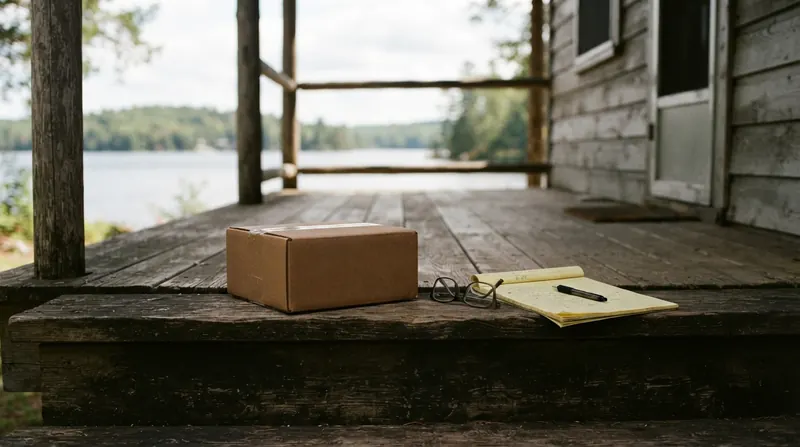
Thirty peach gel pouches, and a legal pad to judge them by
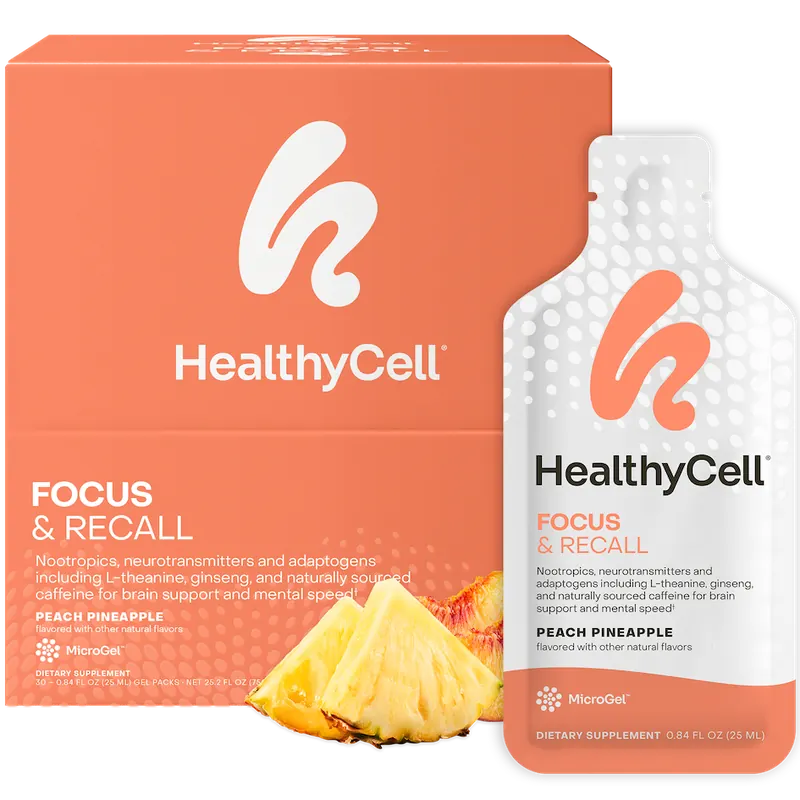
A 25-milliliter gel pack you squeeze into your mouth or a glass, with thirteen ingredients, 40 milligrams of caffeine and a peach-pineapple taste.
CHECK AVAILABILITYMade and sold by HealthyCell, Mount Pleasant, South Carolina · 30 pouches of 25 ml · 40 mg of caffeine each · return within 30 days of the order · show the box to your pharmacist first
What Buyers Wrote, Word for Word
The seller's page showed 602 reviews with an average of 4.6 stars when this was written, most with its purchase mark.
I read the ones written after the recipe changed in 2022, and I've left out every review the store rewarded.
Why leave some out?
Because a review the store paid for, even with a small credit, belongs in a different pile, and I'd rather keep the piles apart.
Here are the ones I'd actually read if I were deciding.
I picked warm ones, lukewarm ones and cold ones, since a pile of only five-star reviews tells you nothing.

I am familiar with ingredients in Focus product and like that it's a liquid form. I've used it for almost a month and am aware that my focus and recall is better. That's pretty good for being 68. I will continue using the supplement for sure.

I wish I could say more of the products, I haven't taken the focus*recall as consistently as I would like, I had about a two week period where I was taking a packet daily and was impressed with the results as far as recall and planning, I have a hectic schedule at 63 yrs of age and take my supplements before heading to work, and at times I don't have time to take the liquid packet.

I have been taking the focus and recall in the afternoon at work. I have not noticed any obvious difference with taking it, but I definitely do not experience the post lunch energy crash that I used to.

I take this in the afternoon when I start to get sluggish, helps me to finish the day strong!

Really helps me get thru the day about mid-afternoon when my brain starts getting tired/foggy.
What do these add up to?
They're honest opinions from real buyers, and they aren't a study, because nobody who wrote them had a second box with nothing in it to compare against.
Read them for the hour they name, and the way people took the pouch.
Mid-morning, mid-afternoon, straight or in juice, and never late.
Reviews tell you how people used a pouch and how the next hour felt to them. They can't tell you which line did it, and the caffeine alone makes most people more alert. [1]
Short answers from the end of the dock
Is this a medicine?
No. It's a dietary supplement in a gel pouch, and it isn't meant for any health condition.
How much caffeine is in one pouch?
Forty milligrams. A 12-ounce cup of brewed coffee holds 113 to 247 milligrams. [2]
Do I need water to take it?
No. You tear the corner and take it straight, or stir it into a glass.
Which lines have the closest study?
Caffeine and theanine together, close to a small one-dose study measured at 60 and 90 minutes. [8]
Why see the pharmacist first?
Because of the club-moss line, huperzine A, which acts on an enzyme some everyday things also act on. [21]
How long until I notice anything?
The seller says within thirty minutes, for two or three hours. The studies measured that kind of window, not weeks.
Can I take it in the evening?
I wouldn't. It carries caffeine, and several buyers said a late pouch cost them their night.
What if it doesn't suit me?
Tell the seller within thirty days of the order and send it back with the order number. The postage back is yours.
The Whole Legal Pad, on One Index Card
If I had to fit all of this on a card in my tackle box, this is what it would say.
- Caffeine, 40 milligrams: about a third of a small cup or less, counted with your coffee. [2]
- Caffeine plus theanine, 40 and 100: close to a one-dose study that measured switching and distraction at 60 and 90 minutes. [8]
- Ginseng, 200 milligrams at 1 percent: a quarter of the strength of the sevens study, which was in young adults. [11]
- Phosphatidylserine, 100 milligrams: the exact trial dose, in our age group, no better than the dummy capsule. [13]
- Tyrosine, 300 milligrams: maybe, in a hard hour. [14]
- Taurine and the B vitamins: flat on thinking tasks. [15] [16]
- Turmeric and the seed oil: no task behind them here. [19] [20]
- Huperzine A, 50 micrograms: the pharmacist first. [21]
- One pouch, morning or early afternoon, never the evening.
- Thirty days from the order to decide.
The Last Hour on the Dock
I finished these notes on a still evening near the end of September.
The loons were back on the far side, and the water had that polished look it gets just before dark.

Walt asked me one more question before he went home.
"So, does it work?"
Here's the honest answer I gave him.
The first two lines on that pouch, the caffeine and the theanine, sit close to a small study that found faster, more accurate attention in the hour or so afterward.
Most of the other lines sit a long way from their studies, or came back flat, or were never tested on a task at all.
And no study has tested the pouch itself, so nobody can tell you what the whole thing does.
That's not a bad pouch.
It's a pouch with a clear right-hand column for its first two lines, and a lot of blank space after that.
So who should reach for it?
A man who wants an hour or two of steadier attention without a second pot, who likes the gel, and who has shown the box to the pharmacist.
Who shouldn't?
Anyone hoping for something that changes memory over months, because the studies don't say that and I won't either.
A pouch for the hour after. The lake, the plate and the evening glass for everything else.
If you decide to try a box, you now know what each line was measured on, and what to ask before the first pouch.
If you decide not to, the water, the walk and the card table are still there, and they cost less than any box.
Either way, I hope you get a few more quiet mornings on your own dock this fall.
Mine are right outside the window, and the coffee's gone cold again.
The peach gel pouch, read one task at a time
A 25-milliliter gel pack you squeeze into your mouth or a glass, with thirteen ingredients, 40 milligrams of caffeine and a peach-pineapple taste.
CHECK AVAILABILITYHealthyCell, 3301 Salterbeck Street, Mount Pleasant, South Carolina · (800) 975-9606 · 30 pouches a box · one pouch a serving · counted from the order, 30 days to return
Every line of the panel, with its plain name, its amount, the task it was measured on, who was in each study and who paid for it, is written out in the ingredient and advertising guide linked at the foot of this page.
The guide also explains the club-moss line for your pharmacist and sets the caffeine beside a cup of coffee.